Security guide
Why black boxes on a PDF leak
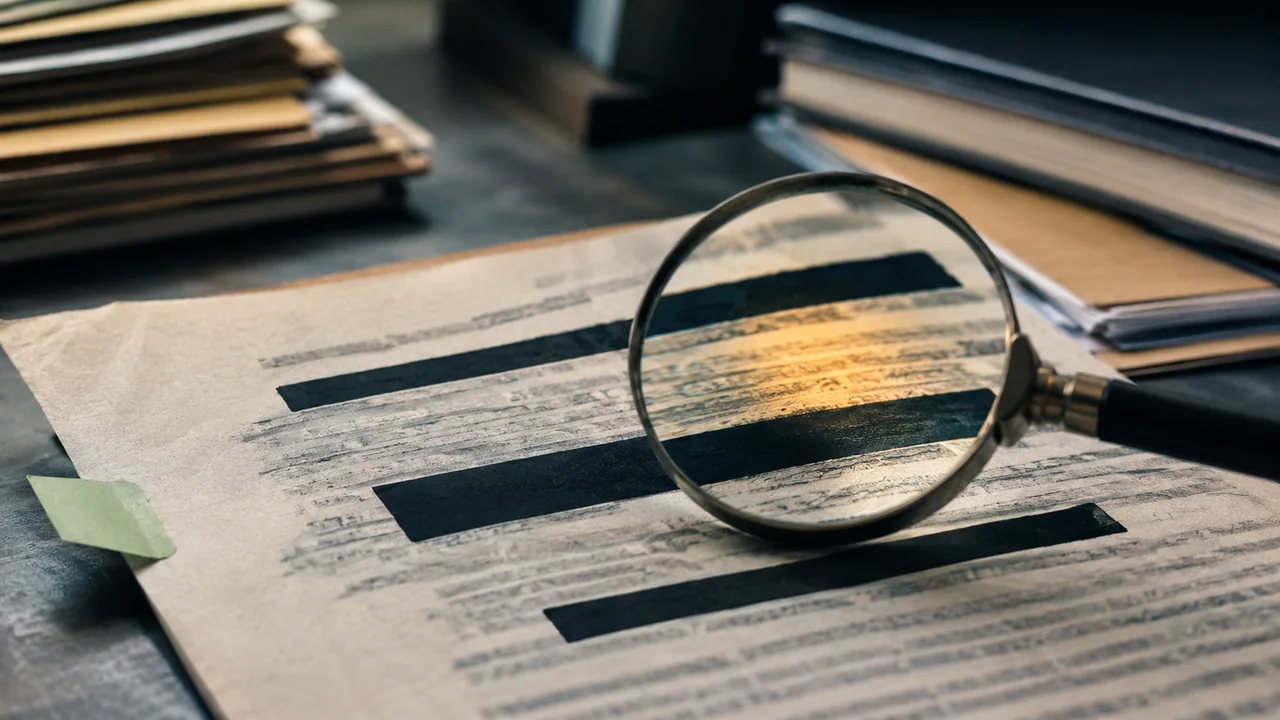
Covering a PDF passage with a black rectangle is not redaction. PDFs render in layers: the box is one layer, the text another, and the box merely sits on top while the text objects stay intact. Anyone can select-all and copy, run a parser, or OCR the page to recover what you thought was hidden. That's "fake redaction" — it gives a false sense of safety and is more dangerous than not redacting at all.
Verify before sharing
Real-world failures
Paul Manafort's lawyers covered sensitive passages in a court filing with black boxes — reporters copy-pasted the "hidden" text right out.
The Epstein documents and numerous declassified files hit the same problem. Researchers estimate ~90% of "redacted" PDFs can be reversed in 30 seconds.
Why it happens
"Draw a rectangle" in graphics software just adds an opaque shape on top of the page; it deletes nothing underneath. The text, images, and vector paths all remain in the file.
Worse: even some tools' "redact" button only changes the display layer without rewriting the content stream, so the result is still recoverable.
What real redaction is
Real redaction must make the covered content physically disappear. The most robust approach rasterizes any page with a redaction into an image and burns the black bars into the pixels — the page becomes a picture, the original text objects no longer exist, and copy/parse/OCR all come back empty.
The cost is that the page loses its searchable text layer. But a redacted file doesn't need to be searchable, so it's a worthwhile trade.
Don't forget to strip document metadata (author, timestamps) too, or identity info still leaks.
FAQ
- Isn't a fully opaque black box enough?
- No. Opacity only affects display; the underlying text objects remain in the file and can be copied and extracted.
- How do I verify my redaction worked?
- After export, select-all and copy in a PDF reader and search keywords to confirm nothing comes back; or run the fake-redaction detector.