Blur / pixelate / black-out image regions
Select what to hide, pick Gaussian blur / pixelate / solid black — burned into pixels
Blur / pixelate / black-out image regions runs locally and is designed for verifiable privacy work: process, export, then confirm the sensitive content is gone before sharing.
Drag an image here, or click to choose
Processed locally in your browser — never uploadedOperational notes
What this tool proves
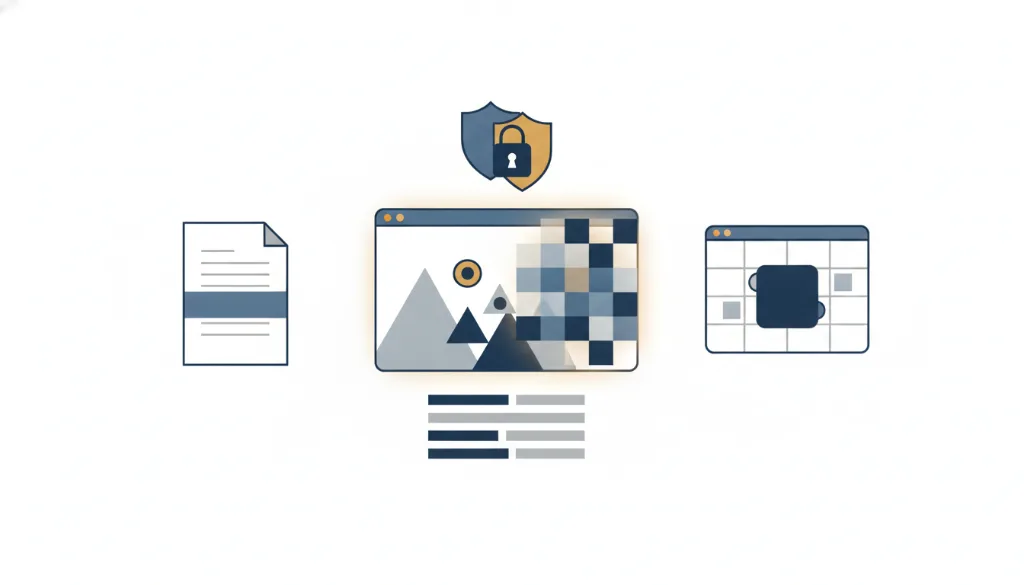
Need to hide a phone number, ID, license plate, or face in a screenshot? Select the region and choose Gaussian blur, pixelate (mosaic), or solid black. The key part: the mask is burned into the pixels before export, physically destroying the original pixels underneath — not just an overlay layer (which leaves the original data in the file, recoverable). For maximum safety use solid black or pixelate (blur carries a theoretical risk of partial reconstruction). Fully local; images never upload.
How to use Blur / pixelate / black-out image regions
- 1Drop an image — processed locally, never uploaded
- 2Draw one or more regions to cover
- 3Choose blur / pixelate / black; the mask is burned into pixels on export
- 4Download — the original pixels are unrecoverable
Why this tool
We truly burn the mask into the pixels before export and tell you plainly that blur is weaker than solid black or pixelate — the kind of verifiable, honest grading most online maskers skip.
FAQ
- Which is safer, blur or solid black?
- Solid black and pixelate are safest (information is physically erased). Gaussian blur has a theoretical risk of partial deconvolution; for maximum safety use solid black or pixelate.
- Can the original be recovered after masking?
- No. The mask is burned into the pixels on export, so the original pixel data no longer exists in the output file.
Related tools
State privacy rights
Deletion laws near this workflow
These source-checked rows connect local redaction and PII cleanup to state privacy deletion rights. The cluster is staged noindex until final legal review.
Updated 2026-06-10 · PrivScrub
Sources, review and limits
Last verified
2026-06-17
Author
RedactCat editorial desk
Reviewer
Privacy workflow review
Primary sources
- Local PDF/image parsing and canvas rendering APIs
- User-marked redaction regions and export settings
- OCR helpers where the page explicitly offers OCR
Redaction is high risk. Always inspect the exported file for hidden text, metadata, layers and missed sensitive information before sharing.